


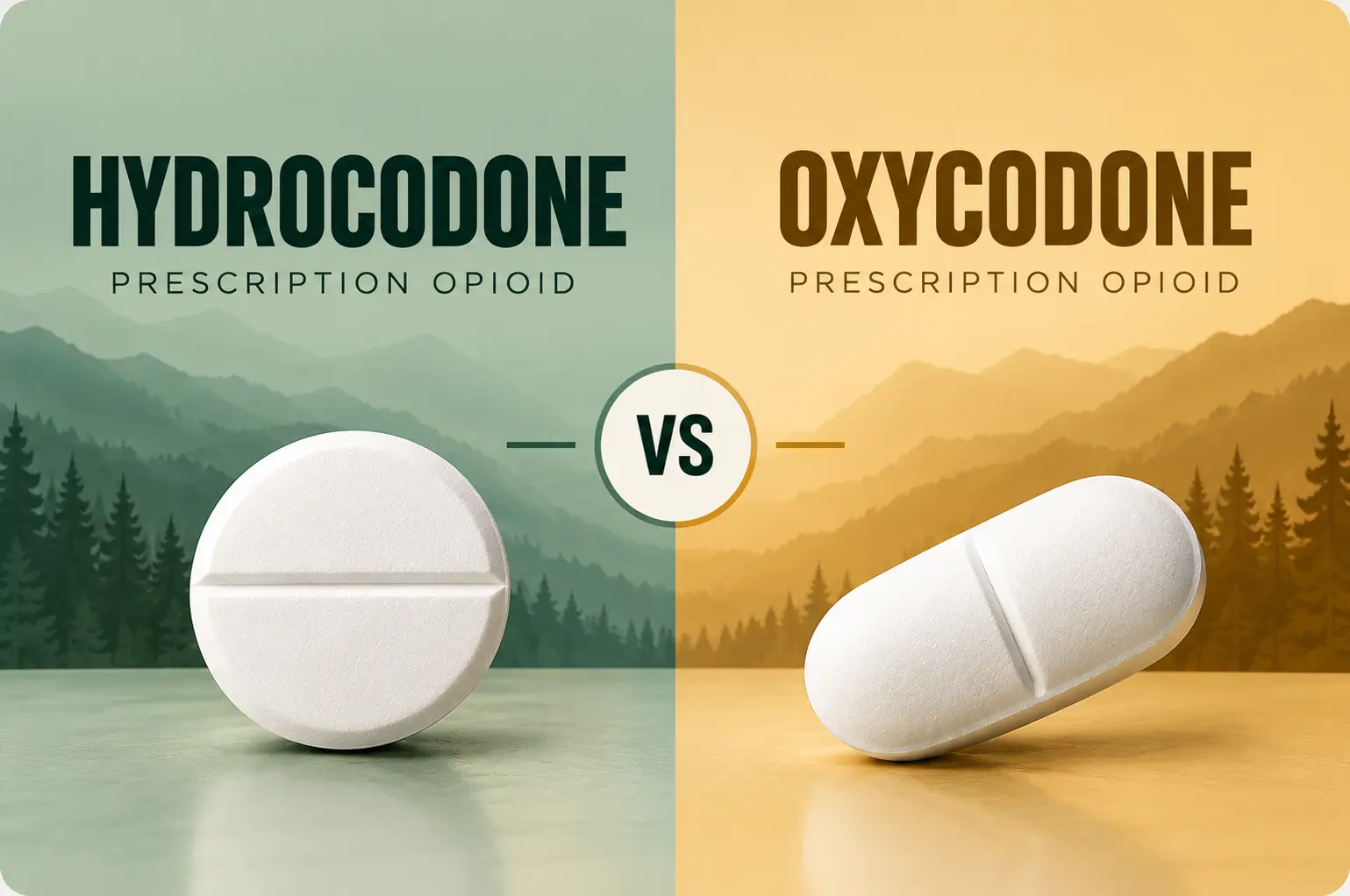
Hydrocodone and oxycodone are prescription opioids used to treat severe pain. They work in similar ways, but they are not the same medication.
What’s the difference between hydrocodone and oxycodone? Both change how the brain and nervous system respond to pain, but they differ in their chemical makeup, available formulations, dosing, and the prescription products that contain them. Hydrocodone is found in medications such as Norco, while oxycodone is found in medications such as Percocet and OxyContin.
Both drugs can cause side effects, physical dependence, opioid use disorder, and overdose. Neither should be considered safer simply because it was prescribed by a doctor.
At a Glance: Hydrocodone vs. Oxycodone
Hydrocodone and oxycodone are prescription opioids used to treat moderate to severe pain. While they work in similar ways, they are different medications and are available in different prescription products. Hydrocodone is found in medications such as Norco, while oxycodone is found in Percocet and OxyContin. Both can cause drowsiness, nausea, constipation, physical dependence, addiction, and dangerously slowed breathing.
Which medication is appropriate depends on a person’s medical condition, pain level, other medications, and response to treatment. Hydrocodone and oxycodone should only be taken as prescribed by a healthcare provider.
What Is Hydrocodone?
Hydrocodone is a prescription opioid pain medication. It works by changing how the brain and nervous system respond to pain.
Hydrocodone can be prescribed by itself in extended-release forms. It is also found in combination medications.
For example, Norco contains hydrocodone combined with acetaminophen. Vicodin has also been a commonly recognized hydrocodone and acetaminophen product.
According to MedlinePlus, hydrocodone can be habit-forming and can cause serious or life-threatening breathing problems. The medication should be taken exactly as directed by the prescribing healthcare provider.
What Is Oxycodone?
Oxycodone is another prescription opioid used to treat severe pain. Like hydrocodone, it changes how the brain and nervous system respond to pain.
Oxycodone is available in immediate-release and extended-release formulations. It is also found in combination medications.
Two commonly recognized oxycodone products are:
- Percocet, which contains oxycodone and acetaminophen
- OxyContin, an extended-release medication containing oxycodone
MedlinePlus warns that oxycodone can be habit-forming even when taken at recommended doses. It can also cause serious breathing problems, particularly when misused or combined with other substances that cause sedation.
Hydrocodone vs. Oxycodone: What Are the Main Differences?
Hydrocodone and oxycodone belong to the same class of medications, but they are two different opioids.
Both can relieve severe pain by acting on opioid receptors in the nervous system. They also share many of the same side effects and risks.
Their primary differences include:
- Chemical structure
- Available doses and formulations
- Immediate-release and extended-release options
- Combination medications in which they are found
- How an individual responds to the medication
Because people respond differently to opioid medications, one drug may provide better pain relief or cause fewer side effects for one person than another.
That does not mean someone should switch between hydrocodone and oxycodone or change a dose without medical guidance.
Is Oxycodone Stronger Than Hydrocodone?
When comparing hydrocodone vs. oxycodone, many people want to know which medication is stronger.
Oxycodone is generally considered more potent on a milligram-for-milligram basis, but potency is not the same as effectiveness or safety.
The effects of either medication depend on the prescribed dose, formulation, the person’s opioid tolerance, medical history, and other medications or substances being used.
For that reason, hydrocodone and oxycodone doses should not be compared or substituted without guidance from a healthcare professional.
If pain is not being controlled by a prescription, taking additional medication can be dangerous. The person should contact the healthcare provider who prescribed it instead.
Vicodin vs. Percocet
Another common comparison is Vicodin vs. Percocet.
The main difference is the opioid contained in each medication.
Vicodin contains hydrocodone and acetaminophen.
Percocet contains oxycodone and acetaminophen.
Because both are combination medications, the acetaminophen matters too. Taking multiple products containing acetaminophen can unintentionally increase the total amount consumed and may cause serious liver damage.
Both medications also carry the risks associated with prescription opioids, including dependence, addiction, respiratory depression, and overdose.
Norco vs. Percocet
The Norco vs. Percocet comparison is similar.
Norco contains hydrocodone combined with acetaminophen. Percocet contains oxycodone combined with acetaminophen.
Both are prescription opioid pain medications, and neither should be taken more frequently or in larger amounts than prescribed.
If you are uncertain about which opioid or other ingredients are in a medication, check the prescription label or ask a pharmacist.
Is OxyContin the Same as Oxycodone?
OxyContin and oxycodone are related, but the names do not mean exactly the same thing.
Oxycodone is the opioid medication. OxyContin is an extended-release medication that contains oxycodone.
Extended-release medications are designed to deliver medication over a longer period.
Oxycodone is also available in other formulations, including immediate-release medications and combination products such as Percocet.
This distinction is important when comparing OxyContin vs. hydrocodone because the formulation of a drug can affect how it is prescribed and taken.
Hydrocodone vs. Oxycodone Side Effects
Hydrocodone and oxycodone can cause many of the same side effects because they are both opioids.
Possible side effects include:
- Drowsiness
- Dizziness
- Nausea
- Vomiting
- Constipation
- Headache
- Dry mouth
- Itching
- Changes in mood or alertness
One of the most serious risks is respiratory depression, which means breathing becomes dangerously slow or shallow.
MedlinePlus drug guides warn about potentially life-threatening breathing problems associated with these medications.
The danger can become greater when opioids are combined with alcohol, benzodiazepines, or other substances that cause sedation.
Can You Take Hydrocodone and Oxycodone Together?
Hydrocodone and oxycodone should only be taken together when specifically directed by a healthcare professional who knows all of the medications the person is taking.
Both medications are opioids. Combining them can increase drowsiness and the risk of dangerous respiratory depression.
Combination products can create another concern. Some hydrocodone and oxycodone medications contain acetaminophen, making it possible to unintentionally take too much acetaminophen when multiple medications are used.
Never combine prescription opioids, increase a dose, or switch between hydrocodone and oxycodone without medical guidance.
Which Is More Addictive: Hydrocodone or Oxycodone?
Both hydrocodone and oxycodone can lead to physical dependence and addiction.
There is not a useful reason to think of one as the “safe opioid.” Both have the potential to cause opioid use disorder when use becomes difficult to control.
Physical dependence and addiction are also different.
Physical dependence means the body has adapted to the presence of an opioid. Stopping or reducing the medication may cause withdrawal.
Opioid use disorder involves a pattern of opioid use that becomes difficult to control despite negative consequences.
Possible signs include:
- Strong cravings
- Taking more medication than intended
- Repeated unsuccessful attempts to cut back
- Using opioids for reasons other than pain
- Spending significant time obtaining or using opioids
- Continuing use despite problems at home or work
- Losing interest in activities
- Continuing to use despite health or relationship problems
Jaywalker’s opioid rehab for men in Colorado treats men struggling with hydrocodone, oxycodone, and other opioids after any necessary detox has been completed.
Hydrocodone and Oxycodone Withdrawal
Repeated use of either hydrocodone or oxycodone can cause physical dependence. If someone who has become dependent suddenly stops taking an opioid, withdrawal symptoms can occur.
Symptoms may include:
- Anxiety
- Restlessness
- Sweating
- Muscle aches
- Trouble sleeping
- Nausea
- Vomiting
- Diarrhea
- Runny nose
- Watery eyes
A healthcare provider can determine whether and how a prescription opioid should be reduced based on the person’s medical situation.
Jaywalker does not provide medical detox. Men who need detox or medical stabilization from hydrocodone, oxycodone, or another substance must complete that process before entering treatment at Jaywalker.
Once medically stable, men can receive continued opioid addiction treatment focused on long-term recovery.
Jaywalker’s Admissions team can answer questions about admission requirements and the steps that may need to occur before entering the program.
Can You Overdose on Hydrocodone or Oxycodone?
Yes. An overdose involving either opioid can dangerously slow or stop breathing.
Signs of an opioid overdose may include:
- Slow or shallow breathing
- Extreme sleepiness
- Inability to wake the person
- Limpness
- Cold or clammy skin
- Very small pupils
- Choking or gurgling sounds
An opioid overdose is a medical emergency.
If someone cannot be awakened or is not breathing normally, call 911 immediately. Give naloxone if it is available and stay with the person until emergency help arrives.
When Prescription Opioid Use Becomes a Problem
Taking hydrocodone or oxycodone for pain does not automatically mean someone has an addiction.
The concern is when opioid use becomes increasingly difficult to control.
A man may begin taking his prescription more often, become focused on when he can take the next dose, use opioids for emotional relief, or repeatedly try to cut back without success.
Changes may also begin showing up in relationships, finances, work, or daily responsibilities.
Those patterns can indicate opioid use disorder and are worth discussing with a qualified professional.
Getting Help for Hydrocodone or Oxycodone Addiction
When prescription opioid use becomes difficult to control, treatment can help a man address more than the drug itself.
At Jaywalker, men work on recognizing the patterns connected to substance use and developing healthier ways to respond to stress, emotions, relationships, and everyday challenges.
Jaywalker’s men’s opioid rehab program provides structured treatment for men struggling with opioids, including hydrocodone and oxycodone. Care can include individual and group therapy, relapse prevention, peer support, fitness, outdoor activities, life skills, and support for co-occurring mental health concerns.
Contact Jaywalker’s Admissions team to learn more about treatment and whether Jaywalker may be the right next step.
Frequently Asked Questions
Are hydrocodone and oxycodone the same drug?
Is Percocet hydrocodone or oxycodone?
Is Norco hydrocodone or oxycodone?
Is OxyContin hydrocodone or oxycodone?
Are hydrocodone and oxycodone both addictive?
Do hydrocodone and oxycodone have the same withdrawal symptoms?